
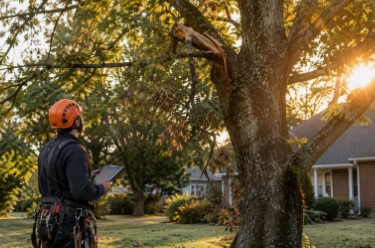
In Chesnee, South Carolina, mature trees add shade, privacy, and character to residential and commercial properties, but damaged limbs, unstable trunks, and storm debris can quickly create safety concerns. Warrior Tree Service helps local property owners manage these challenges through tree removal, trimming, pruning, stump grinding, emergency tree care, and storm-damage cleanup. With advertised 24/7 emergency service, the company assists with urgent situations such as fallen trees and blocked access.
Whether you need routine maintenance, hazardous tree removal, or cleanup after severe weather, choosing the right solution depends on the tree’s condition, its proximity to structures, and the work required. Property owners seeking reliable tree service in Spartanburg can also explore services available in the surrounding Upstate area. By evaluating potential hazards, planning access, and clarifying debris removal before work begins, property owners can make informed decisions that help protect their homes, businesses, and outdoor spaces.
Why Tree Hazards Can Escalate Quickly Around Chesnee
Chesnee properties often feature mature shade trees near homes, sheds, barns, fences, driveways, and open yards. That proximity creates value, but it also creates a target if a limb or tree fails. Heavy rain can soften soil, wind can stress a weak branch union, and ice can add weight to limbs that already have defects. A healthy-looking tree is not automatically a safe tree, especially when its structure has changed over time.
Tree risk depends on more than the weather forecast. Tree species, age, canopy shape, past pruning, decay, root condition, soil moisture, and the distance to a structure all matter. The USDA notes that tree form, size, condition, species, wood properties, pruning, and wind speed can influence storm resistance. In developed areas, selective structural pruning and prompt removal of identified hazards can help reduce threats near homes, roads, and other infrastructure.
For nearby properties outside Chesnee, homeowners who need dependable tree service in Spartanburg can use the same practical approach: assess the tree, identify what could be affected if it fails, and choose a work plan that fits the tree’s condition and the property’s layout.
Conditions That Deserve a Closer Look
- Large limbs extending over a roof, garage, parked vehicle, play area, or driveway.
- Dead branches that remain lodged in the upper canopy after wind or rain.
- A trunk with visible cavities, substantial cracks, loose bark, or signs of decay.
- Two major stems that meet in a narrow, weak-looking union.
- A tree that has recently begun leaning or whose soil appears lifted around the roots.
- Limbs rubbing against siding, roof edges, gutters, or utility lines.
- Old stumps that create a mowing obstacle, trip hazard, or barrier to a landscaping project.
How Warrior Tree Service Can Help With Tree Assessments
Tree decisions should not be based solely on what can be seen from a window or from the end of a driveway. A professional on-site assessment can consider the condition of the trunk and canopy, the available space for equipment, the location of buildings and fencing, access points, drainage conditions, and the need to protect nearby landscaping. It also gives the property owner an opportunity to discuss whether the priority is safety, clearance, appearance, future growth, or restoration after storm damage.
Location: Warrior Tree Service LLC | 520 S 962, Chesnee, SC 29323 | (864) 278-2555 | https://warriortreeservicessc.com/
Warrior Tree Service provides local tree care for residential and commercial properties in Chesnee and the Upstate. The company states that it handles tree removal, trimming, pruning, stump grinding, emergency response, and storm cleanup. For difficult removals near structures or in limited-access spaces, careful planning and the appropriate equipment are essential.
When to Avoid Doing It Yourself
Homeowners should not climb a damaged tree, cut overhead limbs, or operate a chainsaw near a tree that is leaning, split, lodged in another tree, or resting on a structure. The danger is not always obvious. A limb can shift unexpectedly, a cut section can swing under tension, and a tree near electrical wires can create a serious utility hazard. OSHA identifies tree care as hazardous work involving risks such as falls, falling objects, chainsaws, and contact with energized power lines, which is why complicated or storm-damaged work should be left to trained professionals.
If a tree or branch is touching a power line, stay away from the area and contact the utility provider. Do not attempt to move limbs, ropes, ladders, or equipment near energized lines. For all other urgent tree hazards, keep people and pets away until the area can be evaluated.
Choosing Between Pruning, Trimming, and Tree Removal
Removal is not the only answer when a tree has a problem. Some trees can remain valuable parts of a Chesnee landscape when targeted pruning addresses deadwood, excessive weight, poor clearance, or weak growth. The right service depends on the tree’s condition and its location relative to people and property.
Tree Trimming for Clearance and Appearance
Trimming generally focuses on overgrown branches that interfere with usable space. It may improve clearance above driveways, walkways, roofs, fences, and outdoor living areas. Proper trimming can also remove small dead branches and help a canopy look more balanced. It should be selective, rather than excessive, because indiscriminate cutting can create additional stress and unwanted regrowth.
Tree Pruning for Structure and Long-Term Care
Pruning is more focused on a tree’s structure and health. It can include crown cleaning to remove dead or broken branches, thinning where appropriate, crown raising for clearance, and reduction of selected limbs. The South Carolina Forestry Commission explains that pruning is an important tree maintenance practice and advises leaving large-tree pruning or the removal of heavy limbs to skilled arborists. Young trees can especially benefit from early structural attention because small issues are often easier to correct before limbs become large and heavy.
Tree Removal for Serious Hazards
Removal may be the practical choice when a tree is dead, badly decayed, structurally compromised, severely storm-damaged, or positioned where a likely failure could strike a house, vehicle, road, fence, or occupied area. Removal can also be appropriate when a tree is declining beyond recovery or when its roots and structure no longer provide dependable support.
Before removal begins, a thoughtful work plan should account for the direction of cuts, the location of targets, equipment access, neighboring property, and debris handling. On a tight Chesnee lot, crews may need to lower sections in a controlled manner instead of simply dropping large pieces. The goal is not merely to get the tree down. It is to complete the work with a plan suited to the property.
What to Do After Storm Damage in Chesnee
After a thunderstorm, high-wind event, or ice accumulation, take time to assess the property from a safe distance. A limb on the ground is obvious, but damage higher in the canopy can be more dangerous because it may remain suspended until another gust or vibration causes it to fall.
- Keep the area clear. Do not allow children, pets, visitors, or vehicles beneath damaged limbs or leaning trees.
- Watch for power lines. Treat downed or contacted lines as energized and report them to the utility provider.
- Do not cut under tension. Fallen trunks and branches can store energy that is released suddenly when cut or moved.
- Document visible damage safely. Photos from a secure distance may be useful when discussing the situation with an insurer or tree service provider.
- Request an assessment. A professional can determine whether the priority is emergency removal, limb reduction, debris cleanup, or monitoring.
Warrior Tree Service advertises 24/7 emergency tree service and storm damage cleanup for urgent situations, including fallen trees and blocked access. This can be particularly important when a tree obstructs a driveway, damages a roof, affects a vehicle, or leaves unstable debris near a frequently used part of the property.
Why Stump Grinding and Cleanup Should Be Part of the Conversation
Tree work does not end with the final cut. After a removal, a property owner may still have logs, branches, sawdust, ruts, and a stump to consider. Cleanup helps restore normal use of a driveway, yard, parking area, or business entrance. It also allows the owner to assess the site’s condition and decide what comes next.
Stump grinding can be useful when a remaining stump interferes with mowing, poses a trip hazard, or prevents a future landscaping plan. The area can then be considered for grass, planting, hardscaping, or another purpose. Before planting a replacement tree, it is wise to consider available root space, sunlight, mature size, drainage, and distance from structures and utilities.
How to Make a Warrior Tree Service Request
A Warrior Tree Service request is easier when the property owner can clearly describe the situation. Note whether the tree is dead, leaning, storm-damaged, overgrown, or close to a home or utility line. It is also helpful to mention access limitations, gates, steep terrain, fences, outbuildings, vehicles, and any immediate safety concerns.
- Describe the tree and the concern, including whether the situation appears urgent.
- Arrange an on-site walkthrough to review the tree and work area.
- Discuss the recommended scope, whether that involves pruning, removal, cleanup, or stump grinding.
- Review the estimate and confirm what is included, such as debris hauling and final cleanup.
- Complete a final walkthrough after the work is finished.
Questions to Ask Before Hiring a Tree Service
Tree work involves more than just the price of cutting. A detailed estimate can help homeowners compare service plans and understand the proposed work. Ask questions that relate directly to your property and the outcome you need.
- What exact trees, limbs, or stumps will be addressed?
- Is the recommendation pruning, trimming, removal, or a combination of services?
- How will the crew manage access around a home, fence, garden, driveway, or outbuilding?
- Does the scope include chipping, hauling, raking, and removal of debris?
- Is stump grinding included, available as an option, or excluded?
- How will the work area be protected, particularly when equipment must cross a lawn or driveway?
- What should the property owner do before the crew arrives?
Frequently Asked Questions About Tree Care in Chesnee, SC
Can a leaning tree be saved?
Sometimes, but not always. A leaning tree needs an assessment because the cause may be normal growth, soil movement, root damage, storm impact, or structural decline. A recent or worsening lean deserves prompt attention, especially if the tree is near a structure or area where people gather.
Should dead branches be removed quickly?
Dead or broken branches are more likely to fall than sound limbs, particularly during wind or rain. Their urgency depends on size and location. A small dead branch in an unused wooded area is different from a heavy limb above a driveway, roof, or walkway.
Does pruning make a tree storm-proof?
No tree maintenance program can eliminate every possibility of storm damage. However, appropriate pruning and early removal of clearly hazardous trees can reduce avoidable risks by addressing deadwood, weak structure, and problematic clearance issues.
What should happen if a tree is near a power line?
Keep away from the tree and line, and contact the utility provider if there is any immediate concern. Tree work close to energized lines requires special precautions and should never be attempted by an untrained homeowner.
A Safer, More Usable Chesnee Property Starts With Early Action
For Chesnee property owners, tree care is most effective when it is proactive. A close look at mature trees before storm season, a plan for branches over roofs and driveways, and timely attention to visible decay or damage can prevent a small concern from becoming a larger disruption. Whether the need is careful pruning, hazardous tree removal, emergency cleanup, or stump grinding, the best next step is an on-site assessment that accounts for the tree, the property, and the people who use it every day.