
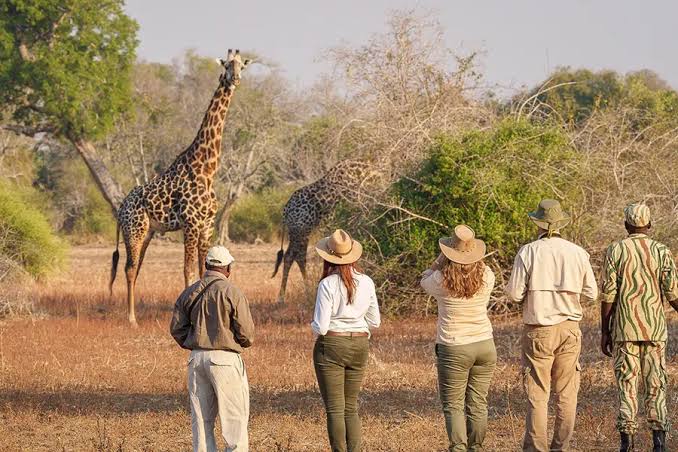
Two couples booked the same week in the same reserve. One pair came home talking about a lion. Or really, about the eleven vehicles parked around a lion, engines running, someone’s zoom lens knocking the back of their heads.
The other couple saw elephants. Their guide cut the engine by a river just before dark and a whole breeding herd waded across, calves and all, maybe forty metres away. Nobody else turned up. They sat there for close to an hour.
It’s tempting to call that luck. It mostly isn’t. Travellers who want to explore unique african excursions usually find the difference was baked in months earlier, in decisions about where to stay and when to go.
Crowds Are a Planning Problem
The animals don’t change between bookings. What changes is how many people are watching them.
Big public parks are wonderful, but a leopard spotted near the main road becomes a traffic jam fast. Private conservancies play by different rules. They cap how many vehicles can sit at one sighting, and many allow things public parks often don’t, like guided walks or drives after dark.
Lodge size matters more than people expect. Here’s what a small camp tends to change.
- Fewer rooms means fewer vehicles heading out each morning
- Guides have time for real questions instead of a script
- The drive can follow fresh tracks rather than a fixed loop
None of this shows up in a glossy brochure photo. Which is exactly why it gets missed.
Why Does the Month Matter So Much?
Because the same patch of bush can be two different trips depending on when you arrive.
Africa’s a year round destination, though each region keeps its own calendar. In the dry months, animals crowd around whatever water’s left, so sightings get more predictable. The green season flips that. You get fresh grass and newborn animals, plus far fewer visitors. The catch is thicker cover, so spotting things takes more patience.
Think about who’s travelling. Someone fixated on big cats and someone chasing soft light for photos probably shouldn’t book the same month. Picking the country first and the dates second is a really common way to get it backwards.
The Travel Day Nobody Thinks About
Say the morning starts with a game drive at six. By ten there’s a road transfer to a dirt airstrip. Then a small plane to another region, and a border crossing before dinner.
Each step’s easy enough alone. Stitching them together is where things go sideways.
Anyone hoping to explore unique african excursions across two or three countries will find the gaps between places need as much attention as the places themselves. A few things regularly catch people out.
- Light aircraft often allow soft bags only, with strict weight limits
- Park gate hours and lodge check in times don’t always line up
- Border paperwork drags when nobody’s there to help
Meet and assist support fixes most of this. Someone’s waiting at each transfer point and walks you through to the next flight. A stressful day turns into a fairly pleasant one. And because small planes cut out long road drives, you get more hours in the bush.
What Luxury Actually Means Out There
People hear “luxury safari” and picture plunge pools. Fine, those exist, and they’re lovely after a dusty afternoon.
But ask anyone who’s done a few safaris what made the good ones good. You’ll rarely hear about the bathroom. You’ll hear about a guide who knew which leopard was which. Or a lunch that wasn’t rushed because nobody had to be anywhere.
What tends to make the real difference looks like this.
- Owner-run lodges with only a handful of rooms
- Guides who’ve worked the same area for years
- Pacing that leaves breathing space between activities
Families might want lodges that genuinely welcome kids. Honeymooners often like a few slow beach days tacked onto the end. For anyone with serious camera goals, a privately guided trip with its own vehicle is worth a look. That’s usually a separate add on rather than something bundled in by default.
Small Courtesies Go a Long Way
Locals often won’t say anything, but they notice. It’s worth picking operators that put money back into the area, too. Lodges that hire local guides and trackers help protect the habitat the animals depend on. That choice keeps mattering long after you’ve unpacked at home.
Back at the River
The elephant crossing looked like pure chance to the couple watching it. It wasn’t, quite. It needed the right month and a conservancy with hardly any vehicles. It needed a guide who could afford to wait, on an itinerary that didn’t have anyone racing back for dinner. Strip away everything that could’ve crowded that moment, and what’s left is usually the part people remember for years.