
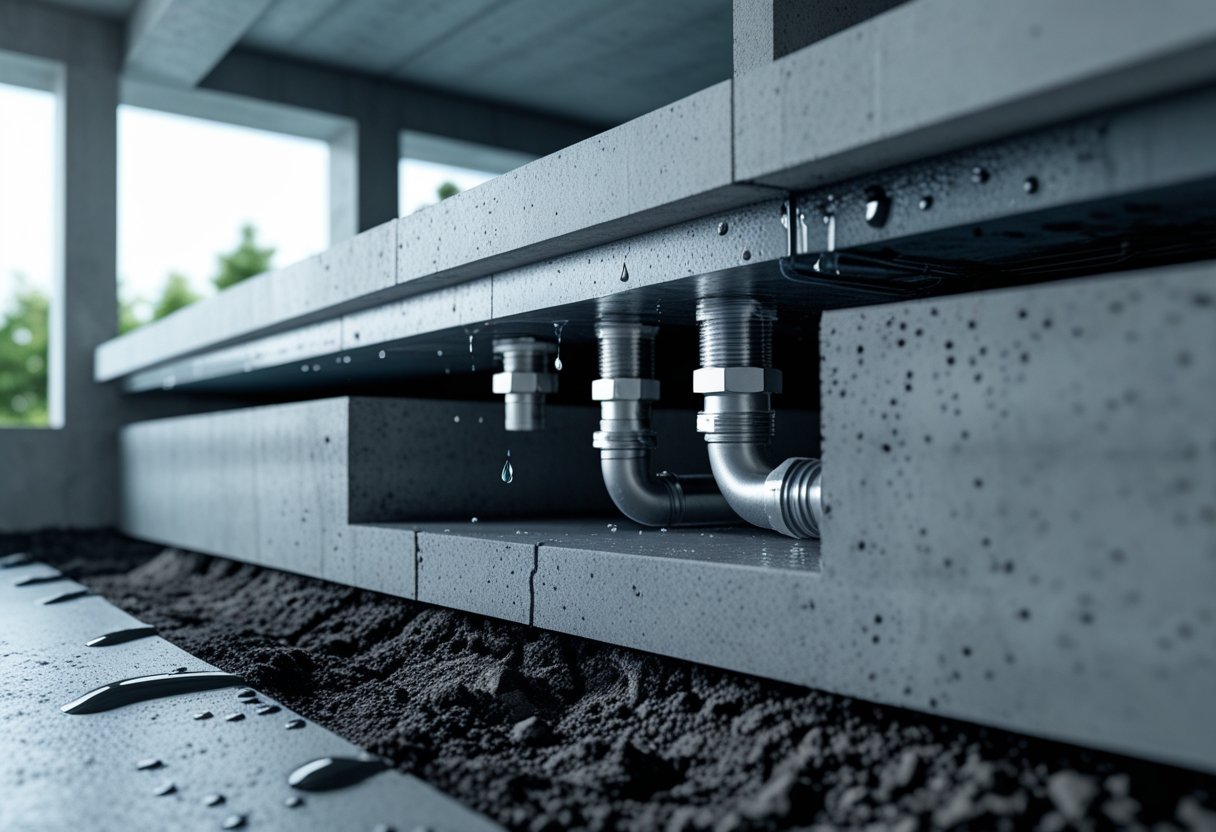
A slab leak develops when a water pipe beneath a concrete foundation cracks, separates, or begins to corrode. Because the damaged line is hidden, the first sign is rarely a visible pipe problem. Instead, a property owner may notice a higher water bill, damp flooring, reduced pressure, warm spots underfoot, or the sound of water moving when every fixture is turned off.
The challenge is finding the source without tearing through large areas of flooring and concrete. As bobtheplumbersd.com notes, non-invasive tools can narrow the search before any surface is opened. This can reduce disruption and help prevent unnecessary damage to finished rooms.
Escaping water can soften nearby soil, damage flooring, encourage mold growth, and place stress on parts of the foundation. Since a small leak may remain hidden for weeks, early investigation often makes the repair simpler.
Clues Hidden in Plain Sight
Slab leaks usually reveal themselves through small changes rather than one dramatic event. A water meter that continues moving when no water is being used is one warning. Other clues include running-water sounds, unexplained dampness, cracked flooring, musty odors, or a sudden drop in water pressure.
Hot-water lines can create another symptom. When warm water escapes beneath the slab, one section of the floor may feel warmer than the surrounding area, helping narrow the search.
Not every wet spot comes from a slab leak. Moisture may come from drainage problems, appliance connections, or condensation, so an assessment should first rule out accessible sources.
Pinpointing the Leak Without Guesswork
Detection usually starts with a visual inspection and a review of recent symptoms. A technician may check fixtures, exposed supply lines, water pressure, the meter, and areas where moisture has appeared. This helps determine whether the problem is connected to a supply line, drain line, or another source.
Acoustic equipment can listen for the sound made by pressurized water escaping from a pipe. Electronic sensors amplify vibrations that may be impossible to hear without specialized tools. Infrared cameras may reveal temperature differences caused by warm or cool water beneath a surface. Video inspection can help in some drain systems, although it is not suitable for every buried supply line.
Pressure testing may isolate sections of the system to show where pressure is being lost. Because no method works perfectly in every case, technicians often compare several results before marking a repair area.
Choosing the Right Repair Path
Once the leak is located, the next decision is how to reach and repair it. Direct access, sometimes called a spot repair, involves opening the floor and concrete above the damaged section. It may be practical when the break is isolated, the surrounding pipe is still sound, and the area can be reached without excessive damage.
Rerouting is another option. Instead of opening the slab, a new pipe follows a different path through an accessible area. This can avoid major concrete work, but it may require opening walls or ceilings. If buried lines are old or repeatedly failing, replacing a larger portion of the system may offer better long-term value than repairing one leak at a time.
The pipe’s condition determines whether a clamp, coupling, new section, or broader replacement is appropriate. A repair clamp may seal a localized crack or pinhole, while couplings can connect a replacement section after damaged material is removed. Options shown at store.blairsupplyusa.com vary by size, material, flexibility, and intended use. The selected part must match the pipe’s diameter, material, pressure, and surrounding conditions.
What Happens During the Repair
Before work begins, the water supply is shut off or the affected section is isolated. Nearby belongings may be moved, and dust controls placed around the work area. If direct access is required, the floor covering is removed and a limited section of concrete is opened above the marked location.
The damaged pipe is exposed and cleaned so its full condition can be examined. A small defect may be repaired with an approved clamp or a short replacement section. If corrosion extends farther than expected, the opening or repair plan may need to change.
After the work, the line is pressure-tested and checked for leakage. The opening can then be filled, the slab restored, and the finished flooring repaired. Drying may also be necessary if water has spread into surrounding materials.
A Repair Is More Than Stopping Water
A lasting solution should address why the pipe failed, not only the hole itself. High water pressure, corrosion, soil movement, poor installation, and contact with rough materials can all contribute to damage. Correcting an underlying pressure issue or protecting a rerouted line may reduce the chance of another failure.
It is also important to decide whether the leak is isolated or part of a larger pattern. One defect in an otherwise healthy system may justify a focused repair. Repeated leaks, widespread corrosion, or several weak sections may make broader replacement more sensible, even though it costs more initially.
The best decision considers disruption, cost, pipe age, access, and the likelihood of future leaks. A clamp may be suitable in one situation, while rerouting or repiping may be safer in another. No single repair method is best for every property.
Acting Early Protects More Than the Pipe
Slab leaks are difficult because they stay out of sight while water continues moving through the surrounding structure. Early warning signs should be treated as reasons to investigate, not as proof that major demolition is required. Modern detection methods can often identify the problem with limited disturbance.
Once the leak is found, the repair should be based on the pipe’s condition and the extent of the damage. Accurate detection, compatible materials, careful installation, and pressure testing all matter. Acting promptly can limit water waste, reduce property damage, and turn a hidden plumbing problem into a manageable repair.