
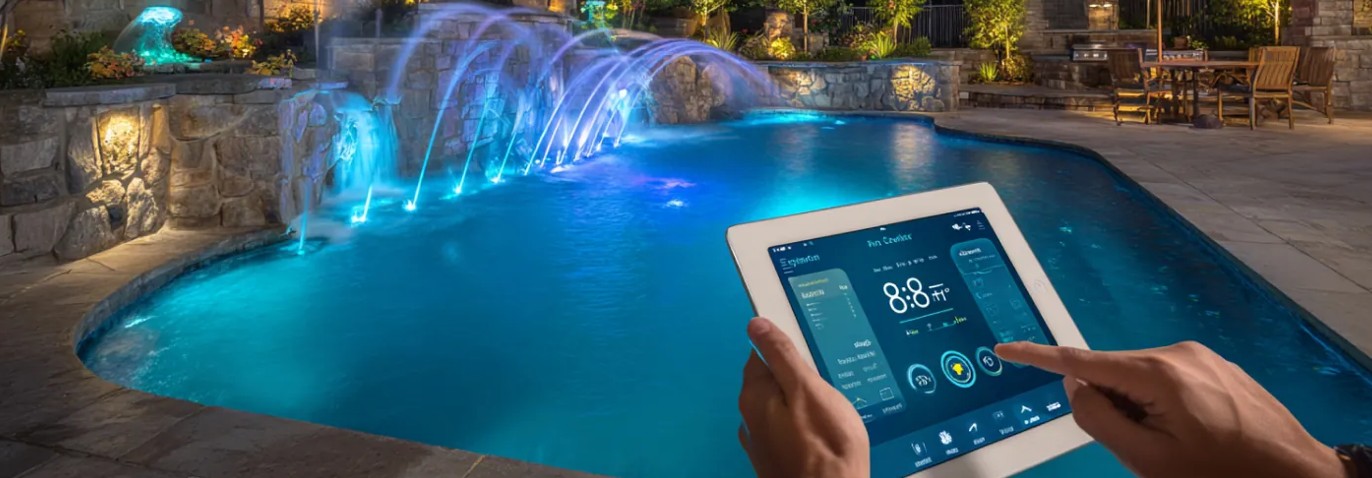
Renovating a swimming pool often begins with visible problems. Faded surfaces, cracked decking, outdated lighting, or aging equipment may finally convince a homeowner that it is time for a change. Yet the most valuable improvement may be one that is barely visible: a smarter way to operate the entire pool.
As homeowners consider residential pool updates, many are looking beyond appearance alone. They want a pool that is easier to heat, light, monitor, and maintain. Automation can address those needs by bringing several controls together in one convenient system.
That does not mean every renovation requires the most advanced technology available. Automation works best when it solves real problems without making pool ownership more complicated. The right setup should match the pool, the budget, and the way the homeowner actually uses the outdoor space.
Renovation Creates the Perfect Opening
A renovation is an ideal time to examine more than finishes and decorative features. Once contractors are already evaluating plumbing, wiring, pumps, heaters, and lighting, it becomes easier to identify equipment that could benefit from updated controls.
Older pools were often designed when manual switches and basic timers were standard. Those systems may still function, but they can require more attention from the homeowner. Turning on a heater, changing a lighting schedule, or checking whether equipment is running may involve a trip outside to the equipment area.
Adding automation during renovation can reduce the need for separate controls. Instead of completing the cosmetic work and returning later to upgrade the operating system, homeowners can plan both improvements together. This may reduce disruption and help ensure that new equipment is compatible from the start.
Convenience Is More Than a Luxury
Smart controls are sometimes treated as an expensive extra, but convenience can have practical value. A homeowner may want to warm the spa before arriving home, check the pool temperature from indoors, or confirm that the lights have switched off at night.
Mobile controls can make these tasks easier. Depending on the system, an app may allow the user to adjust heating, lighting, water features, pumps, or spa settings. Some systems can also send notifications when a reading moves outside the desired range or when equipment needs attention.
This kind of access is particularly helpful for people who travel, have busy schedules, or do not want to inspect the equipment area every day. However, convenience should not be confused with complete independence. Even a highly automated pool still requires cleaning, testing, inspection, and occasional professional service.
Smarter Operation May Protect the Investment
Automation can support better pool operation by helping equipment run according to planned schedules. This can be useful for pumps, heaters, lighting, and water features that do not need to operate at full capacity throughout the day.
When equipment runs longer than necessary, energy use can rise without delivering a noticeable benefit. Timers and programmed settings can help reduce waste, although the actual savings will depend on the pool’s size, equipment, climate, utility rates, and normal usage.
Water chemistry is another area where smart monitoring may be helpful. Unbalanced water can contribute to scale, staining, surface damage, and stress on certain equipment. Automated monitoring or dosing systems may help maintain more consistent conditions between service visits, but they still need calibration, refilling, and regular checks. Homeowners exploring a major remodel may discuss these options with experienced professionals such as So Cal Custom Pools and Spas in San Diego, CA before deciding how much automation is appropriate. The goal should be dependable control, not technology added simply for its own sake.
Simple Systems Often Work Best
A long list of features can look impressive during a sales presentation, but more features do not always create a better experience. Complicated menus, confusing settings, and unreliable connections may leave homeowners frustrated.
For many pools, a straightforward system that controls the heater, pump, lights, and spa may provide everything the household needs. A clear interface is often more valuable than a platform filled with rarely used options.
Simplicity also matters after installation. Homeowners should understand how to use the controls, change schedules, respond to alerts, and operate essential equipment manually if an app or internet connection becomes unavailable. Good installation should include clear instructions rather than leaving the customer to learn through trial and error.
The Drawbacks Deserve Attention
Automation has clear benefits, but it also brings added costs. Controllers, sensors, electrical work, compatible equipment, and professional installation can increase the renovation budget. Some older components may need to be replaced before they can communicate with a newer control system.
Technology can also fail. Sensors may provide inaccurate readings, wireless connections may drop, and apps may change over time. A homeowner who expects the system to manage everything without supervision could miss a developing maintenance issue.
There may also be ongoing expenses for repairs, replacement sensors, software support, or equipment upgrades. Before choosing a system, homeowners should ask what happens if a component fails, whether manual operation remains possible, and how easily replacement parts can be obtained.
Build the System Around Real Life
The best pool automation plan begins with the homeowner’s routine. Someone who uses the spa every evening may place a high value on remote heating controls. A family focused on entertaining may care more about lighting and water features. Another homeowner may mainly want dependable pump schedules and chemistry alerts.
A qualified professional should review the existing equipment, electrical capacity, plumbing layout, internet coverage, and future renovation plans before recommending a solution. Compatibility is especially important because a system that works well with one equipment setup may not suit another.
Automation should ultimately make the pool feel easier to own. When selected carefully, it can improve convenience, support more consistent operation, and add meaningful value to a renovation. When chosen without a clear purpose, however, it may add expense and complexity without improving the swimming experience.
A beautiful pool may catch the eye, but a thoughtfully controlled pool is often the one homeowners enjoy using year after year.